LA Clippers / Intuit Dome
Diseñando experiencias digitales para un ecosistema de estadio en vivo donde fans, staff, eventos y operaciones tenían que funcionar juntos en tiempo real.
Contribuí a la experiencia digital de Intuit Dome, el ecosistema de estadio de LA Clippers, en touchpoints de fans y operativos: user flows, soporte de investigación, la experiencia de calendario, la estrategia de notificaciones y una propuesta de User Communication System.
Empresa
LA Clippers / Intuit Dome
Industria
Entretenimiento / Deportes / Tecnología de venues
Rol
UX Designer
Tipo de producto
Ecosistema digital de estadio / Fan App / Staff App
Duración
May 2024 – Dic 2024 · Jun 2025 – Oct 2025
Equipo
UX, Diseño Visual, BA, PO, Stakeholders del cliente, Investigación, Desarrollo
Métodos
Discovery, User Flows, Benchmarking, Intercepts, IDIs, Estrategia de notificaciones, Prototipado, Documentación
Herramientas
Figma, FigJam, Claude, Jira, Confluence, Miro
Estado
Ecosistema lanzado / Optimización post-lanzamiento / Algunas propuestas evolucionaron después del handoff
Confidencialidad
Parte de este proyecto está bajo NDA: las pantallas, la lógica de negocio y los detalles operativos sensibles aparecen difuminados o simplificados. Puedo compartir más detalle en una entrevista o revisión de portafolio.
Contexto
Intuit Dome es un ecosistema de estadio donde las experiencias digitales acompañan a fans y staff antes, durante y después de cada evento en vivo: descubrimiento de eventos, notificaciones, herramientas operativas y mejoras post-lanzamiento.
Me sumé en plena presión por el lanzamiento del estadio y volví más adelante para la optimización post-lanzamiento, con un alcance que cambiaba constantemente.
Por qué importaba
En un estadio, las decisiones digitales afectan cómo los fans descubren eventos, se mueven por el venue y usan los servicios mientras todo ocurre en vivo. El UX tenía que conectar la lógica de producto, las restricciones operativas y el comportamiento real de los fans sin frenar la entrega.
Mi rol
Trabajé como UX Designer, entre la ejecución práctica y el pensamiento estratégico de producto.
- Diseñé user flows, pantallas de alta fidelidad, benchmarks, presentaciones y documentación UX.
- Contribuí a mejoras del Fan App y el Staff App en lanzamiento y post-lanzamiento, cuidando los estándares de accesibilidad ADA.
- Propuse una vista de calendario unificada para juegos y eventos.
- Desarrollé una propuesta de User Communication System con tipos de notificación, prioridades y canales.
- Apoyé investigación remota y presencial con observación, intercepts e IDIs.
El reto
El reto fue diseñar experiencias digitales para un estadio en vivo, donde las decisiones de producto tenían que servir a fans, staff y operaciones bajo condiciones que cambiaban constantemente.
- Reto de usuario: los fans necesitaban descubrir juegos y eventos y recibir información oportuna sin sentirse abrumados.
- Reto de negocio: el producto tenía que sostener el lanzamiento del estadio y la optimización posterior con prioridades en evolución.
- Reto de diseño: el trabajo ocurría en un entorno acelerado, con alcance cambiante y muchos touchpoints que necesitaban consistencia.
Problem statement
¿Cómo podríamos ayudar a fans y staff a navegar una experiencia de estadio compleja con flujos y patrones de comunicación más claros, desde el lanzamiento hasta la optimización posterior?
Objetivos y criterios de éxito
Objetivos de usuario
- Ayudar a los fans a entender juegos, eventos e información del venue.
- Mejorar el descubrimiento en las experiencias de eventos y calendario.
- Reducir la confusión alrededor de notificaciones y mensajes en la app.
Objetivos de negocio
- Sostener el ecosistema digital durante el lanzamiento y el roadmap posterior.
- Traducir el comportamiento real de fans y staff en oportunidades de producto.
Objetivos de diseño
- Crear user flows y propuestas de producto claras.
- Mejorar el descubrimiento de eventos con un calendario unificado.
- Definir una estrategia de comunicación y notificaciones estructurada.
Proceso
01 — Descubrir
Entender el ecosistema del estadio antes de diseñar la experiencia
Empecé por construir contexto: el proyecto exigía entender no solo la app, sino cómo la experiencia digital se conectaba con el venue físico, los fans, el staff y las operaciones en tiempo real.
- Revisé user stories, requerimientos y documentación existente.
- Analicé la relación entre el Fan App, el Staff App, los eventos y las operaciones.
- Apoyé investigación presencial en Intuit Dome con intercepts e IDIs para capturar fricciones reales de fans y staff.
- Usé benchmarks de calendarios, notificaciones y experiencias de estadio.
Cómo usé la IA
Usé Claude para acelerar mi comprensión de las user stories, organizar contexto y generar ideas tempranas de exploración visual. Las decisiones finales fueron mías, basadas en criterios UX, el feedback de stakeholders y las observaciones de investigación.
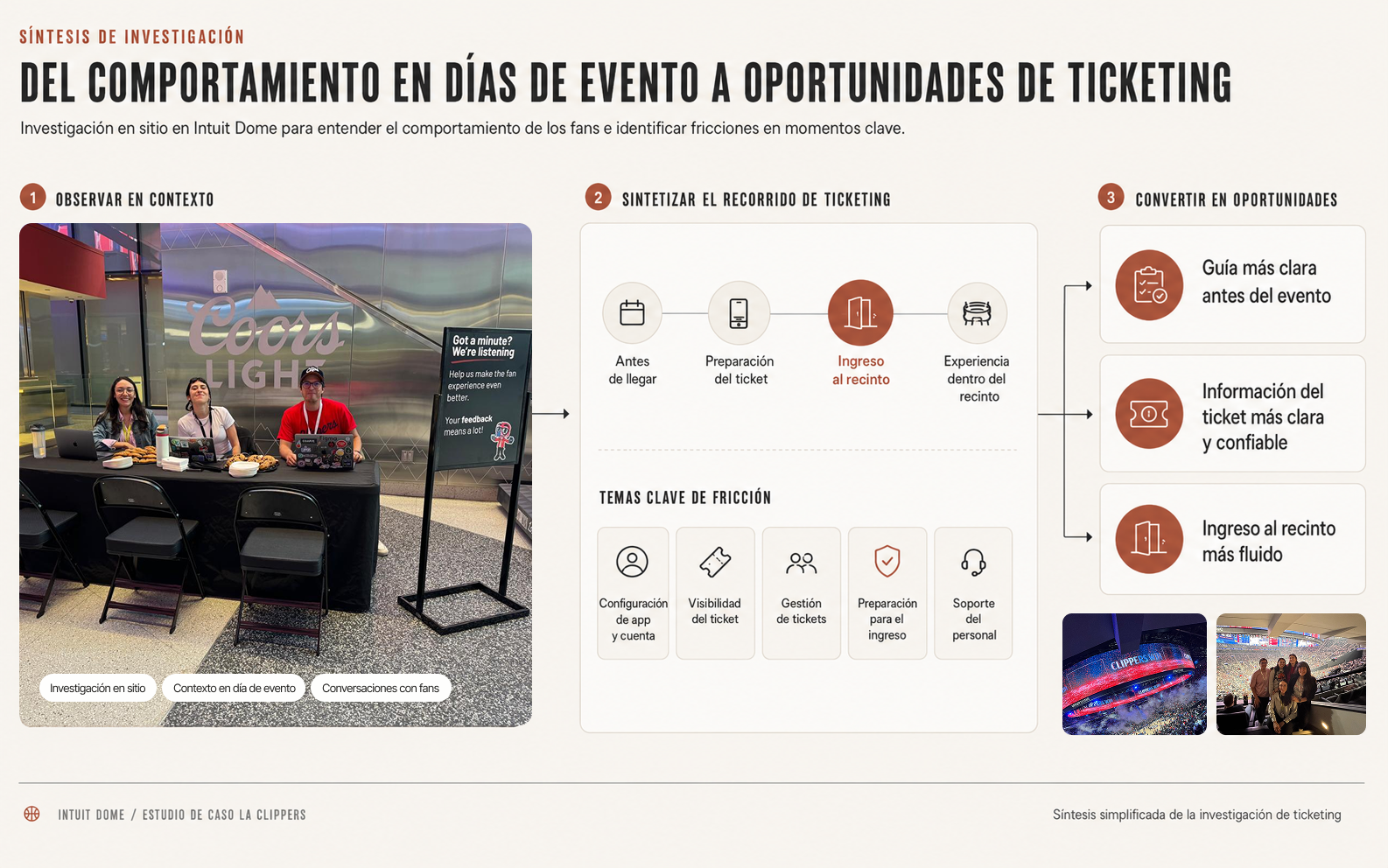
Síntesis de investigación usada para conectar el comportamiento real dentro del venue con oportunidades de producto digital.
02 — Definir
Convertir la investigación en oportunidades UX más claras
Después ayudé a traducir inputs dispersos en oportunidades UX: dónde hacía falta mejor navegación, más estructura en las comunicaciones y lógica de producto más simple.
- Sinteticé observaciones de investigación y user stories en oportunidades accionables.
- Definí la dirección UX para la propuesta de calendario unificado.
- Estructuré la lógica de tipos de notificación, prioridades y canales de entrega.
Cómo usé la IA
Usé IA para resumir user stories complejas y aislar la información relevante para el diseño.
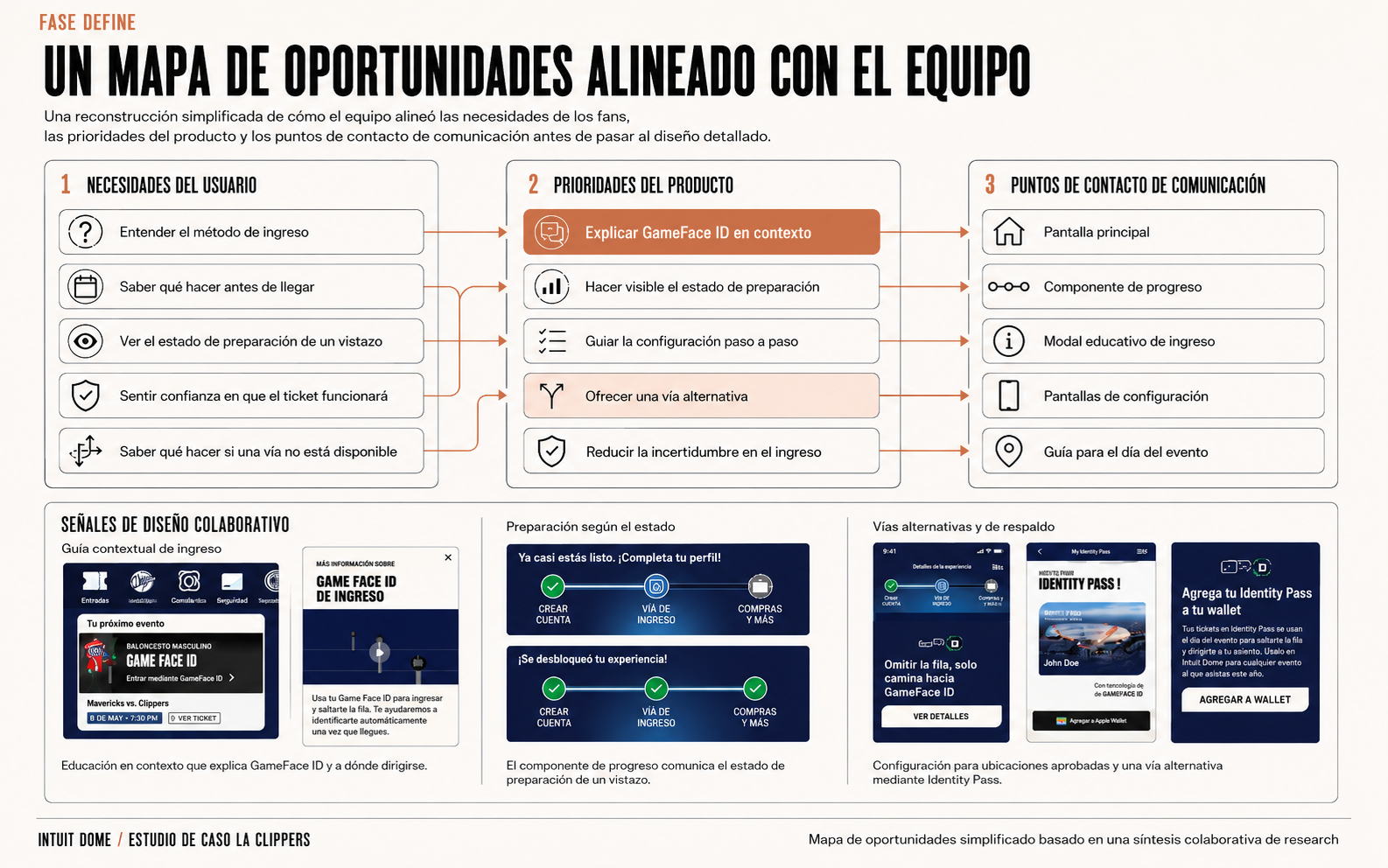
Mapa de oportunidades usado para alinear las necesidades del usuario, las prioridades de producto y los touchpoints de comunicación antes de diseñar soluciones.
03 — Desarrollar
Explorar flujos, mejoras de calendario y patrones de comunicación
Con la dirección clara, pasé a la exploración práctica: flujos, pantallas y propuestas que ayudaron al equipo a evaluar mejoras.
- Diseñé una propuesta de calendario unificado para reunir juegos y eventos en una experiencia más clara.
- Desarrollé la propuesta de User Communication System con categorías de notificación, matrices de prioridad y lineamientos.
- Refiné el copy de emails, notificaciones y mensajes dentro de la app.
- Iteré con el feedback de design leads, producto y stakeholders del cliente.
Cómo usé la IA
Usé IA para refinar el copy de comunicación y generar ideas visuales a partir del contexto y las restricciones del proyecto; los resultados fueron solo un punto de partida.
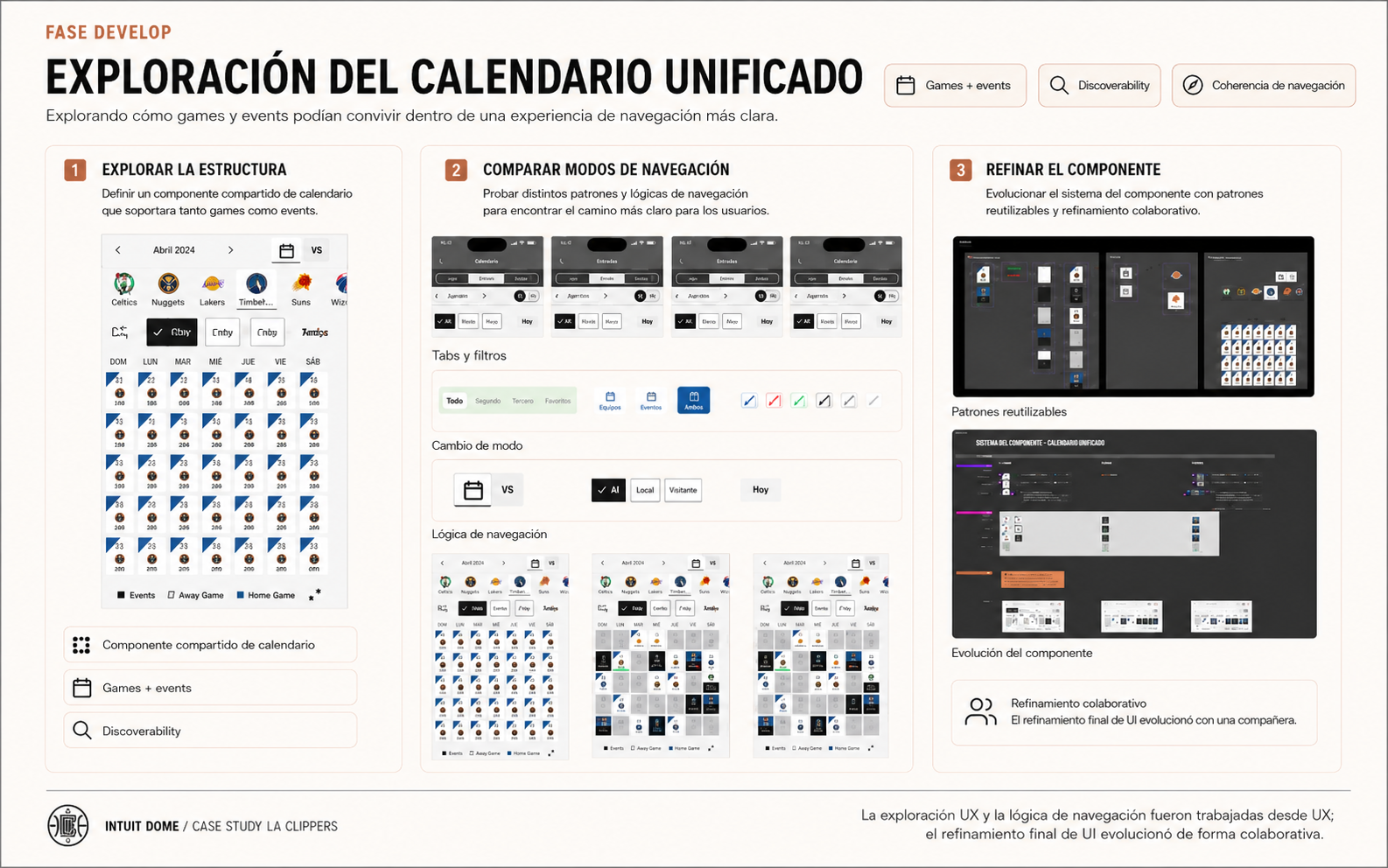
Exploración de calendario usada para mejorar el descubrimiento de eventos y crear una experiencia de navegación más coherente.
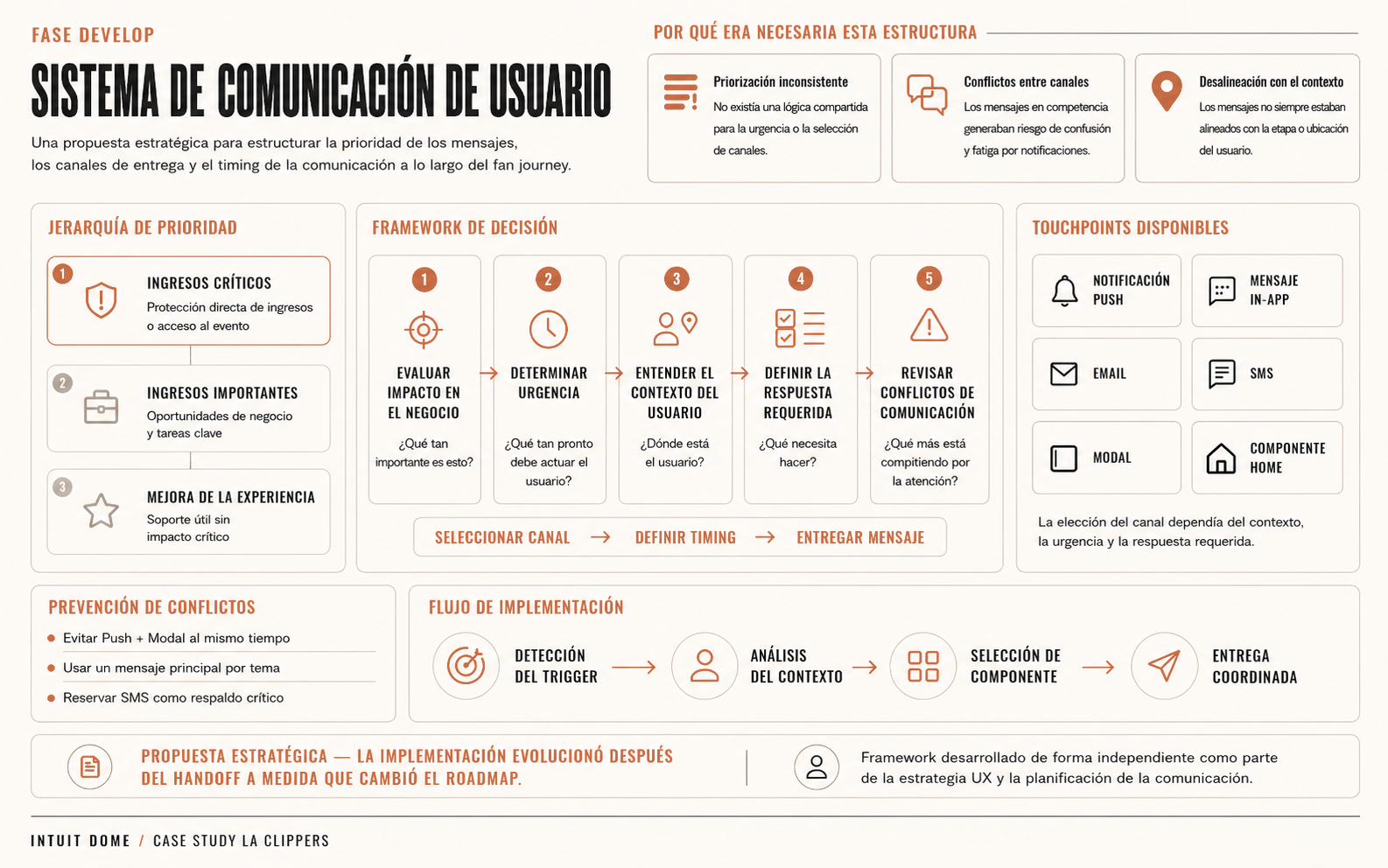
Propuesta de sistema de comunicación creada para aportar más estructura y priorización a los mensajes y notificaciones dentro de la app. Se entregó como una propuesta estratégica; la implementación evolucionó después del handoff a medida que cambió el roadmap.
04 — Entregar
Apoyar el lanzamiento y la optimización post-lanzamiento
El trabajo final apoyó la entrega del lanzamiento y la optimización posterior. Algunas propuestas se entregaron como bases estratégicas y evolucionaron cuando cambió el roadmap.
- Entregué user flows, pantallas, benchmarks, propuestas de producto y documentación UX.
- Contribuí a la propuesta de calendario unificado y al User Communication System como bases estratégicas.
- Ayudé a traducir fricciones reales de usuarios y operaciones en oportunidades de mejora de producto.
Cómo usé la IA
Usé IA para la documentación, el refinamiento de copy y la síntesis rápida de información relevante para el diseño.
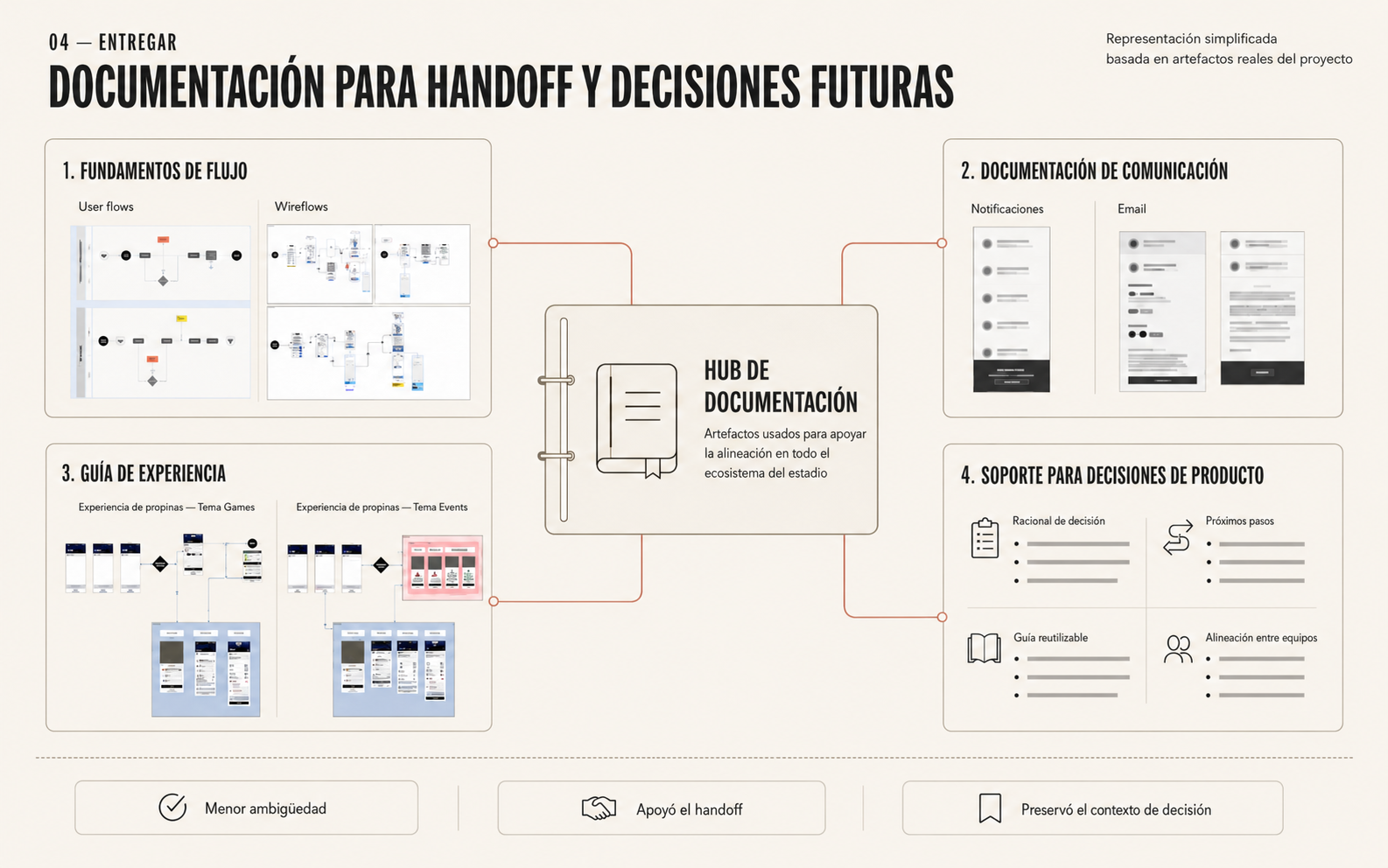
Documentación UX creada para reducir la ambigüedad y dar soporte a futuras decisiones de producto en todo el ecosistema del estadio.
Antes / después
Antes
Múltiples touchpoints, requerimientos cambiantes y comunicaciones que se fragmentaban entre la experiencia del fan y la operativa.
Después
Propuestas UX más claras para el descubrimiento de eventos, la priorización de notificaciones y la optimización post-lanzamiento, basadas en el comportamiento real de fans y staff.
Solución final
La propuesta se enfocó en tres mejoras:
Descubrimiento de eventos más claro
Un calendario unificado reunió juegos y eventos para que los usuarios entendieran qué pasaba en Intuit Dome desde un solo lugar.
Comunicación más estructurada
El User Communication System definió tipos de notificación, prioridades y canales para decisiones de comunicación más consistentes.
Optimización basada en investigación
La investigación remota y presencial tradujo el comportamiento real de fans y staff en oportunidades para el Fan App y el Staff App.
Impacto y resultados
Valor para el usuario
Ayudó a identificar y resolver fricciones que afectaban a fans y staff en contextos reales del venue.
Valor de negocio
Apoyó decisiones de producto de lanzamiento y post-lanzamiento en un entorno de alta presión.
Valor de producto
Estructuras más claras para el descubrimiento de eventos, las notificaciones y la comunicación.
Valor de equipo / proceso
Documentación y propuestas basadas en investigación que facilitaron la alineación cross-funcional.
Obstáculos y trade-offs
El entorno del estadio hizo el trabajo especialmente complejo: los flujos digitales estaban conectados a experiencias físicas en tiempo real, con prioridades y alcance en movimiento.
- Navegar cambios frecuentes de alcance, requerimientos y prioridades.
- Equilibrar las necesidades de los fans con los requerimientos operativos del staff.
- Diseñar bajo la presión del lanzamiento manteniendo la calidad.
- Trabajar en inglés y colaborar en un entorno de proyecto multicultural.
Qué aprendí
En un ecosistema en vivo, el diseño de producto consiste en entender cómo las decisiones digitales se traducen en el mundo real, sobre todo cuando la experiencia está ligada a un espacio físico.
- Aprendí a conectar los flujos digitales con el comportamiento real de los usuarios.
- Mejoré la forma en que traduzco user stories en decisiones relevantes para el diseño.
- Los sistemas de comunicación reducen fricción cuando tienen prioridades claras.
- La investigación es más poderosa cuando ayuda a los equipos a ver lo que pasa más allá de la interfaz.
Lo que los líderes dijeron sobre mi trabajo
Stephanie entregó consistentemente trabajo de alta calidad en user flows, presentaciones, benchmarks y pantallas, mostrando una excelente gestión del tiempo y adaptabilidad en un entorno de proyecto complejo.
Hemant Patil, PM & Camila Maria Ferraro Murdoch, Design Lead
Tu capacidad para tomar la iniciativa y enfrentar los retos de frente, incluso cuando no tienes todas las herramientas y el conocimiento necesarios, es realmente admirable.
Isadora Valline, Design Director
Su contribución a la investigación de Intuit Dome fue crucial. Su experiencia y perspectiva fueron fundamentales para el proyecto.
Carolina Vassallucci Duarte, PM & Lucia Hidalgo, Design Lead
Intuit Dome me llevó a trabajar en el límite entre la experiencia digital y la física al mismo tiempo, con equipos que no siempre coincidían en prioridades. Lo que me llevo de esto es un instinto más agudo para convertir requerimientos que cambian constantemente en propuestas UX lo suficientemente sólidas como para respaldar tanto a los usuarios como a quienes toman las decisiones de producto.
Stephanie Cacheo — Senior Product Designer / UX Lead